
Buying GuidesArticle
What a smart home actually costs for a 3-bedroom house in Sri Lanka
By DIGIMAX Team · 8 April 2026
By DIGIMAX Team · 8 April 2026
This is for the homeowner who has a 3-bedroom house in Sri Lanka, either finished or under renovation, and is trying to work out whether a smart home is actually in budget. We get this question every week on WhatsApp. The short answer is below. The rest of the article is the working out, so you can decide what you want to skip.
For a 3-bedroom house in Sri Lanka, here is what jobs actually cost us in 2026:
These are turnkey figures, including products, wiring labour, programming, and a one-day handover with the family. The big variable is how many cameras and how many wall switches you replace. Those two line items move the total more than anything else.
Three numbers drive the quote on every site we visit. If you understand these, you can pressure-test any quote you get from anyone.
If a quote does not break out those three numbers, ask for a revised one that does. It is the only honest way to compare two vendors.
This is where the system gets used every day, so it is worth the money. We install smart switches on every wall switch, two to four smart bulbs for scene lighting, and a scene switch on the wall next to the main entrance. Typical cost: LKR 90,000 to LKR 160,000. The scene switch alone is the single most loved upgrade in any house we have installed. Press once, the whole room reconfigures.
Skip most of it. A motion sensor under the cabinet for night-time light is useful. A smart socket on the kettle and the coffee machine is useful. Smart bulbs are usually a waste here because kitchen lighting in Sri Lankan homes is almost always plain ceiling tubes that you want bright, fast, manually. Typical cost: LKR 25,000 to LKR 50,000.
Two things matter. A bedside scene switch that turns everything off, including the fan, and a curtain motor if the room gets harsh morning sun. Smart switches on the main light and the fan. Skip RGB bulbs in the bedroom unless you actually want them, they are a novelty. Per bedroom: LKR 35,000 to LKR 65,000.
Motion-activated lighting and exhaust fan control. That is it. A motion sensor and a 2-gang module behind the wall switch is around LKR 12,000 per bathroom. The exhaust auto-running for 10 minutes after the lights go off is the kind of small thing that quietly improves the house.
A video doorbell, a smart door lock, an outdoor camera covering the gate, and motion-triggered porch lights. This is usually LKR 130,000 to LKR 220,000 depending on the lock. The lock is the most expensive line item, between LKR 35,000 and LKR 110,000 depending on whether you want fingerprint, card, app and key, or the full set.
One smart circuit breaker on the main feed gives you whole-house energy monitoring in the app and a remote cut-off. LKR 30,000 to LKR 45,000. We recommend this for any owner already paying over LKR 25,000 a month on electricity, because you usually find one or two appliances quietly running a lot more than expected.
This part will not appear in any sales brochure. There are smart home items that, in a Sri Lankan home, are mostly novelty:
Single-storey house, 1,850 sq ft, family of four, finished build that the owner wanted upgraded after moving in. Brief was "start with what is useful, we will add later".
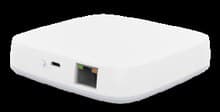
We installed: 12 smart switches across the house, 2 scene switches (entrance and master bedroom), 3 smart bulbs in the living room, a smart door lock on the front door, a video doorbell, two outdoor cameras (front gate and rear garden), a smart fan switch in the master, and a Zigbee gateway with a wired backbone to the router. Total invoice was LKR 712,000 including labour over 3 days.
What the family actually uses, 6 weeks later, in their own words: the bedside "all off" button every night, the front gate camera notification, the porch light auto-on at dusk, and the master bedroom curtain motor (they paid LKR 18,000 to add it after a month). Everything else gets used a few times a week. Nothing is unused.
Yes, and you should. The right way to build a smart home is to start with one zone, live with it for 4 to 6 weeks, then add the next zone. Picking an ecosystem on day one is what makes phasing work. Picking the wrong ecosystem on day one is what kills it.
For a long-term rental, a smart lock and a doorbell camera pay back almost immediately on saved trips for key handovers and access disputes. The rest, probably not. For a short-let or Airbnb, the same plus motion-triggered lights and a remote AC cut-off is a real cost saver.
Almost everything works locally. Lights, scenes, switches, motion sensors, locks and cameras (recording to local SD) keep running. What stops working is remote access from outside the house and voice control through cloud assistants. Get a gateway that does local control by default.
The smart switches stay with the house (they are wired in), but everything plug-in or screwed-on, the cameras, bulbs, scene switches, the gateway, comes with you. Most jobs take a half day to relocate.
Indoor switches, no. Outdoor cameras and doorbells, yes, if you buy badly. Make sure the IP rating is IP65 or higher for anything in covered outdoor positions, IP66 or IP67 for anything fully exposed. We have replaced cheap IP54 cameras that survived 11 months on the south coast.
If you want us to spec your house, send a floor plan or a 30-second video walkthrough on WhatsApp. We will come back with a real number, not a brochure. Talk to a specialist.
Tell us what you're planning. We'll help you spec the right products and get them installed.